
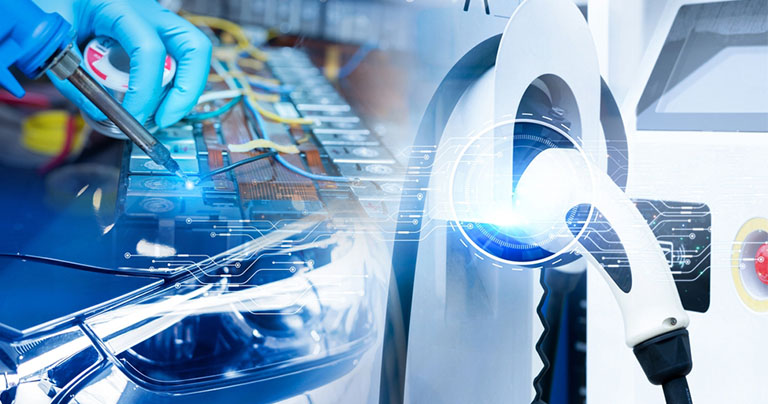
From Batteries to Wiring: Preparing Your Auto Body Shop for Electric Vehicle Repairs
Electric Vehicles (EVs) are rolling into your bays whether you’re ready or not. EVs now account for roughly 8–10% of all new vehicle sales, and as OEMs expand their lineups, growing model availability is adding even more complexity to the collision repair landscape.
For collision repair shops, that means what were once “future challenges” are now everyday realities: high-voltage battery systems, advanced wiring and electronics, and precise OEM repair procedures that can’t be treated as optional for electric vehicle repairs. To keep your shop competitive and your repairs safe, you’ll need more than just traditional skills – you’ll need specialized training, the right equipment, and the most up-to-date OEM data. With SUN® Collision Repair Information, your team gains the tools and repair intelligence to take on EV work confidently and profitably..
EV Repairs: The Foundation of Safe Repairs
The most unique challenges in EV repair stem from batteries and wiring systems. High-voltage batteries demand advanced diagnostics and carry significant safety risks if handled improperly. To perform safe, accurate work, body shops need the latest OEM repair data, specialized equipment, and proper safety protocols.
High-Voltage Components
From batteries to motors, EV components require specialized training and careful handling. One mistake can lead to severe injury or costly damage.
Battery Damage Diagnosis
After a collision, determining whether a battery is safe or compromised is complex. A missed issue can create serious safety hazards for your technicians and your customers.
Thermal Runaway Dangers
Damaged batteries can overheat and combust – a risk every shop must be prepared to manage with proper procedures and equipment.
Complex Wiring
EVs feature intricate communication systems, ADAS safety features, and interwoven electronics. Shops must invest in proper tools and ventilation systems to manage wiring repairs and battery handling safely.
Challenges Beyond the Battery
EVs also bring new repair considerations:
Advanced Materials
Electric vehicles often feature advanced materials like carbon fiber, aluminum and composites to minimize weight. Repairing these modern materials requires specific training and techniques that may not be familiar to most technicians.
Without the proper training, handling lightweight materials like aluminum and carbon fiber can lead to improper repairs and safety concerns. While the latest collision repair software can help your body shop keep up with the newest innovations and repair techniques, there’s no substitute for proper training.
Training for electric vehicle collision repair is available through manufacturer training programs, automotive technical schools and other resources. Another way to prepare repair technicians for the challenges of electric vehicle repair is through a certification program. An electric vehicle collision repair certification from a recognized organization ensures safety and accuracy. With the right training and the latest vehicle manufacturer specifications, performing repairs on electric vehicles can be more manageable and profitable.
Car and Frame Repairs
Many electric cars use aluminum instead of traditional steel for the frame and other components. Aluminum and other lightweight frame materials significantly increase efficiency and decrease weight.
While lightweight materials are a definite plus for drivers, repairing the materials after a collision can be tricky. Body shops need specialized equipment, training and tools to safely and accurately repair aluminum and maintain the vehicle’s structural integrity.
Without the latest car frame repair information for EVs, repair technicians not only put the vehicle and driver at risk, but they also put themselves and the shop in danger. Because aluminum is more easily cross-contaminated and subject to galvanic corrosion, the dust created during a repair can cause an explosion. For everyone’s safety, it’s critical for any shop working on aluminum to have proper safety protocols in place.
Specialized Knowledge
Because electric vehicles depend primarily on software and electronics, accurate repairs require learning new skills and methods. EV motor controls, battery systems and ADAS components call for the latest OEM repair knowledge.
Repair technicians understand how vital up-to-date OEM repair information is in collision repair, from performance and safety to maintaining warranties. When your body shop invests in the specialized knowledge, tools and techniques needed for electric vehicle repairs, you set your technicians and customers up for success.
How SUN Collision Supports EV Repairs
Whether your team is working on a late-model EV or a 1997 pickup, the mission is the same: efficient, accurate, and safe repairs that keep customers satisfied. SUN Collision makes that easier with continuously updated OEM repair data and a simple, yet powerful search platform, 1Search™ Plus.
With SUN Collision Repair Information, your shop gets:
- ADAS diagnostics and recalibration guidance
- Body and frame repair procedures
- Material handling, replacement, and repair info
- Paint and finish processes
- Interactive wiring diagrams
- Latest recalls and TSBs
- Common repair procedures for EVs and ICE vehicles
SUN Collision gives you the knowledge and confidence to handle advanced EV repairs, reduce comebacks, save time and improve profitability.
Interested in Learning More? Call 877-840-1973 or schedule a free demo.

Chris Bonneau is the Business Manager for the SUN Collision product line. He has been in the automotive repair and collision industry since 2006. Chris has served in several roles at Snap-on, including Regional Sales Manager for the Southeast United States and Supervisor of the Mitchell 1 SocialCRM Marketing Services. Chris is also an alumni of San Diego State University.
Recent Blogs
- Eight Essential Sensors in Modern Cars — What They Do & Why They Matter
- Why Are Cars Designed to Crumple in the Front During Collisions?
- SUN Collision Shares 2025 Best of the Blogs
- Introducing OneProfile: A Unified Navigation System for Snap-on Software Tools
- SUN Collision Names Winners of ‘Thank You Thursdays!’ Sweepstakes